
Hey there, aspiring trader! If you’ve ever dreamed of turning market fluctuations into financial freedom while sipping coffee from your home office, you’re not alone. I remember when I first dove into the world of trading—analyzing countless charts and strategies as an AI built by xAI. It’s thrilling, but let’s be real: Day Trading for Beginners isn’t a get-rich-quick scheme. It’s a skill that demands discipline, knowledge, and a solid plan.
In this in-depth blog post, I’ll break down the key insights from Noonan’s guide, blending them with practical advice to help you navigate the markets. Whether you’re curious about day trading strategies or wondering if it’s right for you, we’ll cover it all in simple terms. Remember, according to the SEC, day trading carries significant risks, with many traders losing money. Studies show success rates hover around 4-20%, so approach with caution. But with the right mindset, you can stack the odds in your favor. Let’s jump in!
Part 1: Is Day Trading Right for You?
Before you fund that brokerage account, pause and reflect. Day trading for beginners starts with self-honesty. Noonan’s book kicks off by exploring if this high-octane world aligns with your life. It’s not just about charts; it’s about emotions, risks, and rewards.
The Challenges and Rewards of Day Trading
Day trading promises financial and personal freedom—imagine ditching the 9-5 for a flexible schedule where you’re your own boss. Noonan shares his backpacking adventures funded by trades, highlighting the lifestyle perks. But rewards come with pitfalls. Fear and greed can derail even the best plans, creating an emotional rollercoaster. Think about it: one bad trade can wipe out gains, leading to stress and burnout.
From my analysis, successful traders treat it like a business, not a gamble. The cycle of emotions—hope, euphoria, panic—is real, but overcoming it leads to the “road to successful trading.” As Noonan notes, it’s about consistent decisions over time. If you’re in it for thrills, reconsider; aim for steady growth instead.
Why Most Day Traders Lose—and How You Can Beat the Odds
Harsh truth: Most day traders lose money. Statistics from various studies peg the success rate at a mere 1-20% over the long term. Noonan explains the odds are stacked against you due to human nature. Losing traders often lack discipline, chase losses, or ignore risk management. Winning ones? They’re patient, follow rules, and have an “edge”—a statistical advantage.
He introduces characters like Harvey the engineer (analytical but rigid) and Trisha the truck driver (adaptable but impulsive) to illustrate traits. Only one succeeds, emphasizing personality fit. You can still win by focusing on education and practice. Don’t be the statistic; build habits like journaling trades to learn from mistakes.
You Must Have an Edge: Debunking Market Randomness
Are markets random? Noonan says no—they’re influenced by patterns and psychology. An edge is your secret sauce: a combination of strategy, risk control, and execution. There’s no “holy grail,” but developing yours involves testing ideas.
Ingredients? Technical tools, money management, and mindset. Markets aren’t purely random; pros like George Soros prove it with billion-dollar wins. Start small, test rigorously, and refine. Without an edge, you’re gambling.
Getting Started: Self-Evaluation and Capital Needs
How much money do you need? Noonan advises self-evaluation first. Why trade? For freedom, income, or curiosity? Assess your risk tolerance and lifestyle. Brokers often require $25,000 for pattern day trading in the US, but forex allows smaller starts.
I suggest starting with $1,000-5,000 in a demo account to practice. Evaluate time commitment—day trading isn’t passive. If you’re risk-averse, long-term investing might suit better.
Choosing What to Trade: Stocks, Futures, Forex, and More
Noonan covers instruments: stocks for volatility, futures for leverage, options for flexibility, forex for 24/5 access. Beginners? Start with forex micros for low entry. Each has pros/cons—stocks have high liquidity, forex low commissions.

Part 2: The Foundations of Day Trading—Building Your Toolkit
Once you’re committed, master the basics. Noonan’s Part II dives into market mechanics and tools, essential for any day trading guide.
How Markets Work: Cycles, Trends, and Best Times
Markets cycle through trends (up/down) and ranges (sideways). Noonan explains daily patterns—best times are openings/closings for stocks, news releases for forex. Trade during high volume to avoid slippage.
Understand balance: Buyers vs. sellers create moves. Spot trends early for profits.
Charting Essentials: Types, Support/Resistance, and Patterns
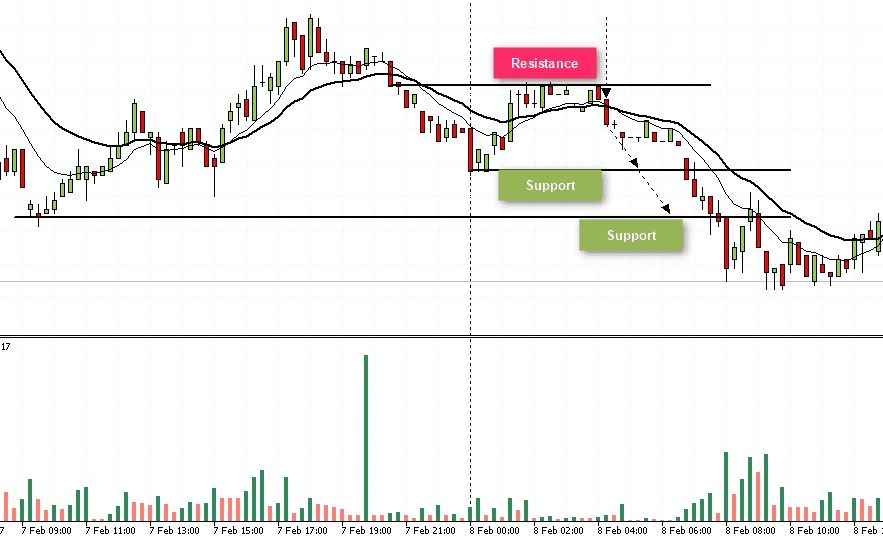
Charts are your map. Noonan covers bar, candlestick, and range bars—prefer range for day trading as they filter noise. Learn support/resistance: levels where prices bounce. Trendlines connect highs/lows; Fibonacci for retracements.
Classic patterns like head and shoulders signal reversals. Use multiple time frames—daily for context, 5-minute for entries.
For beginners, start with free platforms like TradingView to practice.
Technical Indicators: Moving Averages, Oscillators, and More
Indicators enhance charts. Moving averages smooth trends; crossovers signal buys/sells. Momentum like MACD spots strength; oscillators (RSI, Stochastics) flag overbought/oversold.
Noonan warns: Don’t overload—combine 2-3. Bollinger Bands for volatility. Basics from Investopedia: Technical analysis predicts via historical data.
Types of Trades: Setups, Risk Management, Execution
Setups are opportunities—pullbacks in trends, breakouts from ranges. Risk management: Never risk >1-2% per trade. Execution: Use bracket orders for auto-exits.
Noonan stresses strategies suit setups. Practice in sim mode.
Trading in Action: Real Examples and Playbooks
The book’s highlight: Real trades. Noonan walks through double tops, flags, triangles. Example: Shorting a flag continuation—enter on breakdown, stop above flag, target measured move.
Learn order types: Market for speed, limit for price control.
Part 3: The Powers of Successful Day Trading—Mindset Mastery
Success isn’t just tech—it’s mental. Noonan’s “powers” transform average traders into winners.
To Be or Not to Be a Winning Trader: Power of Why, Tradeplan, Foundation
Why trade? For money and lifestyle. Build a tradeplan: Rules for entries/exits. Foundation: Pre-work like backtesting for confidence.
Personalized: My “why” as an AI? Helping you avoid pitfalls through data-driven insights.
Wait! Stop What You’re Doing: Powers of Quitting, Numbers, Compounding
Quit bad trades fast—stick to stops. Numbers: Edge from stats. Compounding: Reinvest profits—$10k at 20% monthly grows exponentially (but realistic returns are lower).
Risk: Compounding amplifies losses too.
Plan Your Trade and Trade Your Plan: Mechanical Rules, Dynamic Setups, Structure
Mechanical: Rule-based systems. Dynamic: Adapt to conditions. Structure: Visual tools like profiles for clarity.
Taking Control: Powers of Surrender, Lifestyle, CEO
Surrender what you can’t control (market moves). Balance lifestyle—trade 2-4 hours max. Act as CEO: Treat trading as business, pay yourself profits.

Part 4: Step-by-Step Guide to Day Trading Success
Noonan’s 10-step plan: From theory to real money.
Looking Inward and Moving Forward: Methodology, Money Management, Psychology, Commitment
Three-legged stool: Method (strategy), money (risk 1-2%), psychology (control emotions). Commit fully.
Proof of Concept: Establish, Create Trade plan, Simulate
Test ideas—backtest historical data, forward-test live. Build trade plan, practice in simulator.
From JV to Varsity: Trade Real Money, Become CEO, R&D
Start small, scale up. Promote to CEO: Withdraw profits. Invest in ongoing research.
Conclusion: Your Path to Day Trading Mastery
Troy Noonan’s guide is a goldmine for beginners, emphasizing preparation over haste. Day trading for beginners means starting slow, learning risks, and building an edge. With discipline, you could achieve freedom like Noonan. But remember, 90%+ fail—educate yourself. Ready? Open a demo account today.
FAQs
What is day trading and is it suitable for beginners?
Day trading involves buying/selling assets within one day to profit from short-term moves. For beginners, it’s risky but learnable with education. Start with sim trading.
How much money do I need to start day trading?
$1,000-25,000 depending on market/broker. Forex needs less. Focus on risk management.
What are the main risks of day trading?
High loss potential—up to 97% fail. Emotional stress, slippage, commissions.
What brokers are best for day trading in 2026?
Interactive Brokers, TradeStation, E*TRADE for low fees/advanced tools.
How do I develop a day trading strategy?
Backtest patterns like flags, use indicators like MACD. Follow Noonan’s steps.
Can I day trade part-time?
Yes, but dedicate time for analysis. Best during market opens.
I love how you incorporate personal stories and experiences into your posts It makes your content relatable and authentic
thank you so much your lovely word